Saturday, November 05, 2005


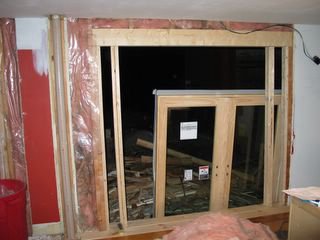
the same frame, showing the new flooring extending out onto the sill.  Posted by Picasa

the header and jacks for the frame for our new doors in the living room. (note new doors and giant pile of debris just outside). Posted by Picasa

Monday, October 31, 2005


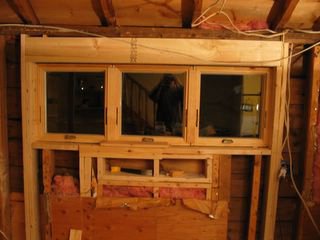
the installation completed Posted by Picasa

the new window with solid header and battleship strong framing Posted by Picasa

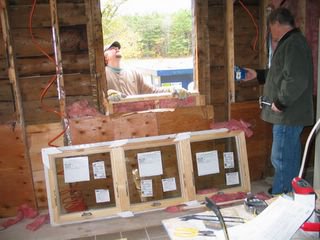
Bud and I examine the original framing Posted by Picasa

the old window comes out Posted by Picasa
a new kitchen window

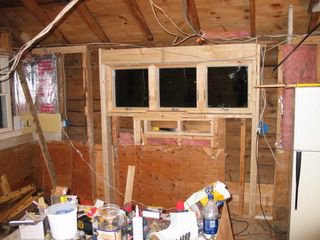
Not nearly as difficult as I expected, our new kitchen window installation was completed today. Lot's of heavy framing, compensating for everything else in the kitchen being off-level, and a bit improvisation is all it took. Bud was a big help, and our watts line to Dave's boatshop for last minute advice was invaluable.

Friday, October 28, 2005


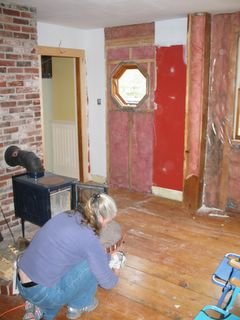
sam makes a fire - walls stripped back for new windows Posted by Picasa

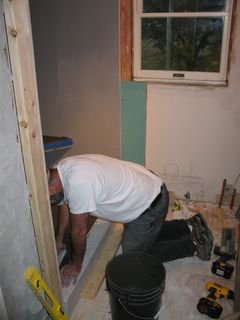
new wall in bathroom with switches Posted by Picasa

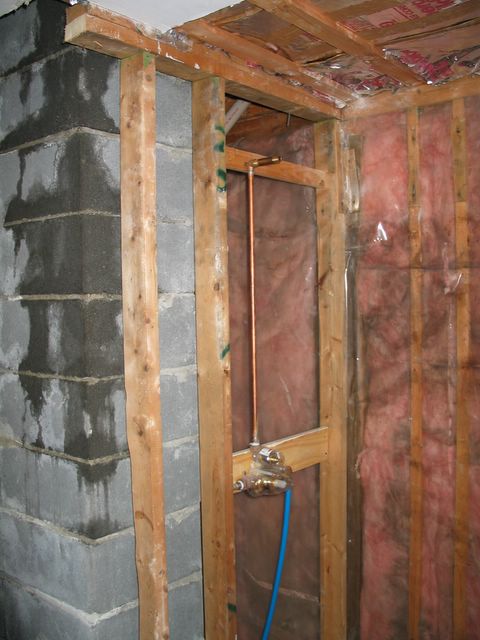
mike roughs in the shower for tile Posted by Picasa

the kitchen fully gutted. the window to the right was removed today Posted by Picasa

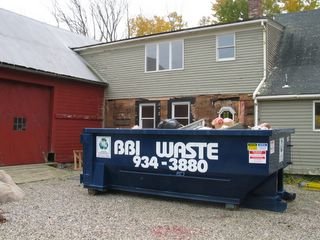
our new dumpster - filled in two hours! Posted by Picasa

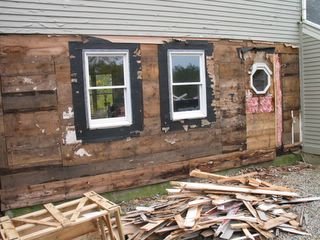
siding removed to make room for new doors and windows Posted by Picasa
progress

Two weeks ago, I stated here that we had passed the point where demolition ends and recontruction begins. Wrong. We've discovered since that any room receiving a moderate amount of renovation needs to be taken completely down to the studs. It's just that much easier to work from scratch than to work around little details.

But we have made significant progress lately. The bathroom is now in the hands of Mike G. - our friend and the tileman on the project. The master bath now has complete plumbing, and the walls are back up, including the new walk-in shower. 40 gallons of concrete and some sticky black waterproofing have made the floor for the shower, and the tile is sitting in one of the barns, waiting for installation, which begins later today. Samantha and I have installed some new wiring in the bath, including switches for the lights, which previously required hand-screwing to turn them on and off (?!).

The new kitchen windows and the large glass doors and matching window for the living room have arrived as well. Framing for the kitchen window is partially complete and I'll be doing more of that today as well.

Samantha finished painting the front of the house, just in time for two weeks of heavy rain, so no further exterior work has been possible. Although Dave and I went up on the roof on one dry day to check the flashing around one of the chimneys where some water was getting in. It was an easy repair and the chimney stack has been much drier since.

I expect the kitchen to start coming together quickly over the next two weeks, and we'll probably ask the appliance people to deliver the big appliances toward the middle of next week.

With the amount of work the two of us are putting into the house, there's no doubt that this place will truly be ours when it's done.

Saturday, October 15, 2005


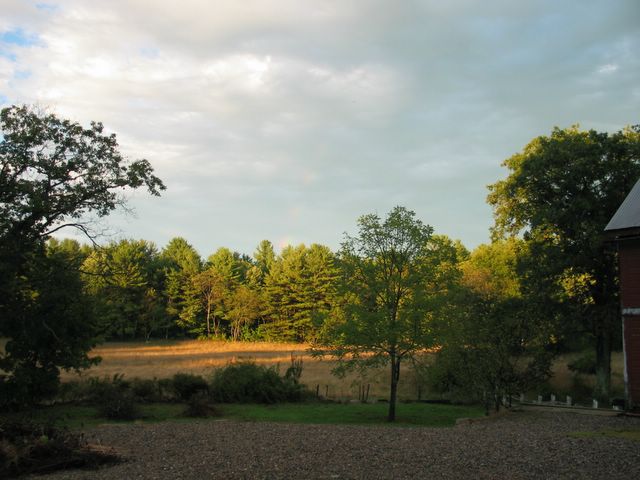
a very hard-to-see rainbow, during a break in last week's rain, across the back yard. Posted by Picasa

looking down into the kitchen from the little 'cathedral' ceiling Posted by Picasa

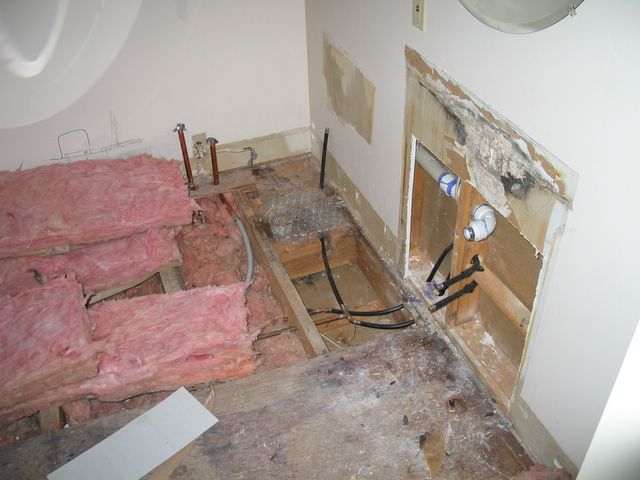
the bathroom floor, with new plumbing Posted by Picasa

the shower wall (with water on the chimney stack) Posted by Picasa
it's all destroyed

We've finally hit the point beyond which demolition starts to slow, and reconstruction picks up. The master bathroom is stripped to the studs, with the new plumbing roughed in. Mike should be laying down the subfloor for tiles, and the wonderboard for the shower wall foundation. It's a good thing he didn't start when he was scheduled, as the recent heavy rain has revealed a leak around the bathroom vent and the woodstove chimney, which rises behind the shower wall. In another week, it would all be sealed up, and we'd likely have to pull some of it out in the future.

The kitchen is significantly more destroyed than during my last post. The ceiling is entirely torn down, and all that remains is the old cast iron sink, which is too heavy to move by myself.

Samantha has been painting away (interiors only during this wet season), and we both hope to put down a new floor in the den next week. After that, we'll have lots of molding to put in, having removed much of it in the demolition.

Monday, October 03, 2005


potential cathedral ceiling Posted by Picasa

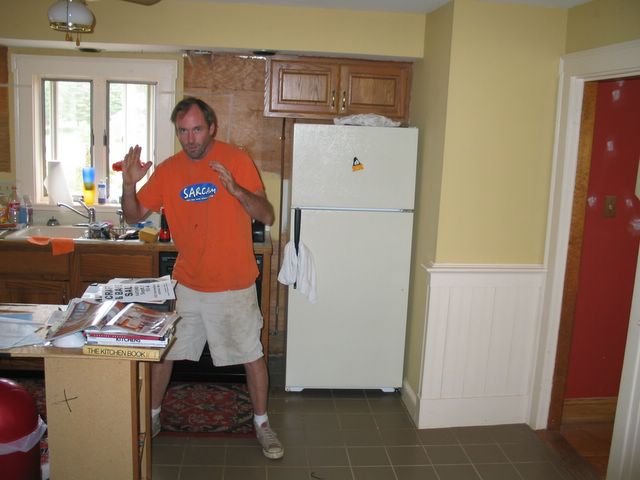
would you trust this man with your kitchen? Posted by Picasa

kitchen destruction Posted by Picasa
demolition man

Demolition, which seems like the simplest, most primitive, part of reconstruction, is actually quite a challenge. Removing a wall or ceiling, pipes or electrical lines generates new problems and possibilities at every turn. With the master bathroom fully demolished, I turned my attention to the kitchen. But after two days of Sawzall and sledgehammer work, it's down to the studs and plywood. All except the ceiling, which we've decided to remove entirely, revealing a small extension of "cathedral ceiling" above the center island and counters.

Deconstruction proceeds on the living room outside wall, where there will be a new pair of doors and a matching window, replacing the rotting wood siding and porthole-like octagonal window.

Thursday, September 29, 2005


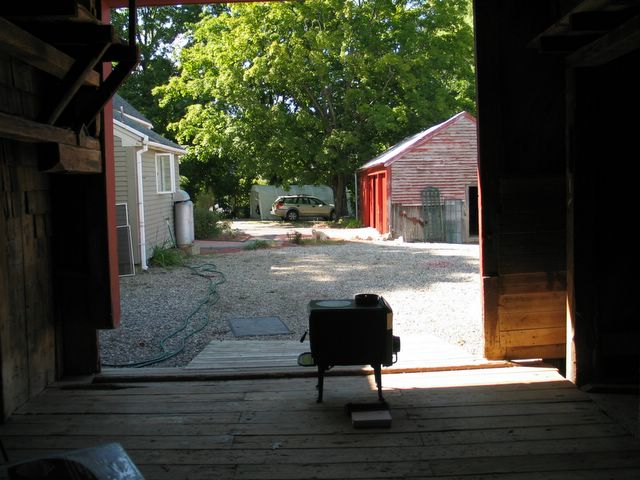
woodstove in the barn Posted by Picasa

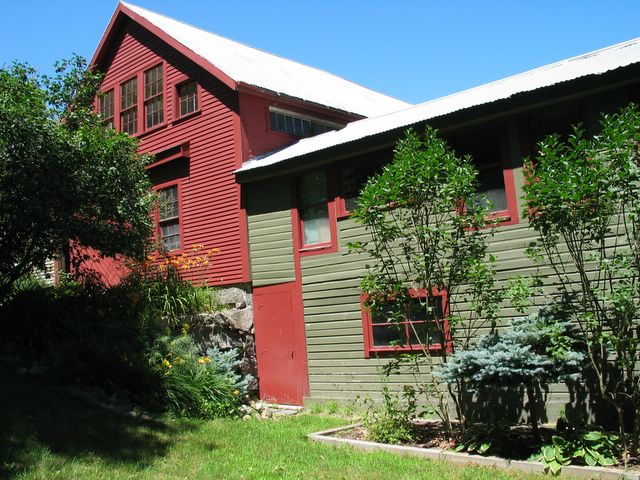
newly painted garage doors Posted by Picasa

Dad weeding the hedgerow Posted by Picasa
folding chairs

It's a shame I can't find or make more time to blog these days. Things are happening at such a quick pace. Been spending much of my time demolishing a bathroom down to the studs, and preparing a kitchen for similar destruction. In between there's talking to contractors, chimney sweeps, tractor salesmen and loggers (about cord wood). A bit of a change from Prospect Heights, Brooklyn.

Samantha and I are glad we opted for Maine where we have so many skilled friends, instead of Columbia County or Vermont where we know few people. The bathroom tilework is in the able hands of our friend Mike G., while the kitchen cabinets are being designed and built by Dave our source for occasional free sailing and the owner of Bullhouse Boat Works, a heritage craft wooden boat building business. We assume our kitchen will float when it is complete. Having knowledgable people to bounce things off of is an indispensible plus.

Although we've spent thousands on new tools in the last month, our most precious purchase was the two folding chairs which remain almost all of the furniture in the new place (everything else remains in storage). For lunch, or when we're just too tired to continue at the end of the day, we drag the chairs to the edge of the "patio" (read gravel) and look out at the field. The past two days have brought a change in birdlife in the trees and hedgerows, and a flock of bluebirds have arrived, diving into the grass for crickets and who knows what else. There were high winds today, and while we sat eating our lunch a cracking noise came from the forest as a tree laid itself down.

Sunday, September 11, 2005


barns one and two. Posted by Picasa

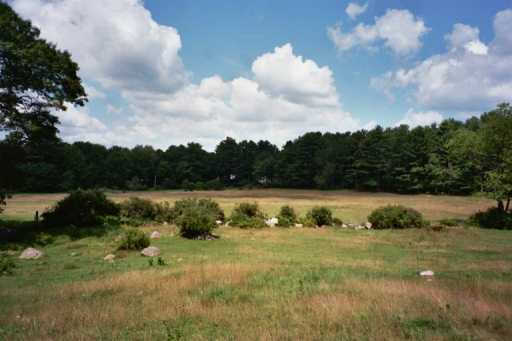
looking from the pasture into the hayfield. Posted by Picasa

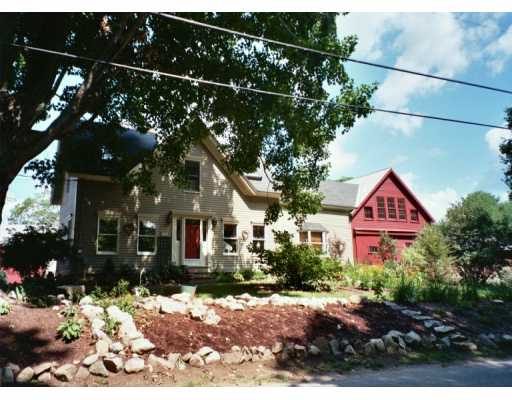
the farmhouse Posted by Picasa

Friday, July 29, 2005

a new home in Maine

My posts have been infrequent and, for the most part, off topic for quite a while now. Sorry for the paucity of book related info. I hope you'll understand. Samantha and I have been planning our move for quite a while now, and after the sale of our place here in Brooklyn, things accelerated nicely. To add fuel to the fire, we found a place in Maine, made a bid this past Monday, and spent the last week gritting our teeth hoping that another bidder wouldn't beat us to the punch. We'll we're in contract now, and assuming the inspections go well, we will be closing on the 25th of August.

The new home is a mid 19th century farmhouse, with some later day renovations, and three attached barns, all on 18.5 acres of mixed farmland and forest. I fully expect that in no time at all, we will have an operational vineyard (for late harvest wines, naturally), bees, truffles, peacocks, goats, vicuna, alpacas and whatever other ridiculously impractical ideas we can come up with. More news soon.

Sunday, July 10, 2005

farm dreams

Been getting a bit carried away lately - reading more books about farming, daydreaming about erosion, and viewing tractors for sale on eBay. Our move still seems a long way off, but seems more real all the time.

Thursday, June 23, 2005

soil & soul

I recently made a reference to lots of good reading - a trend which has thankfully continued. Lately, my mind and reading table have been occupied with books about food, both eating and growing. This week I digested Scott Chaskey's This Common Ground, an ode to organic farming by an experienced farmer, a talented poet and a patient man. Chaskey charts the benefits to soul and soil and in this description of the seasons on Quail Hill Farm CSA in Amagansett, NY which he ran for many years. My subway reading has been Waverley Root's The Food of France. Root's book, which is arranged as a travelogue of sorts, loudly celebrates the local forces which create cuisine (geography, politics, culture, etc.). Originally published in 1958, the book was claiming the importance of terroir for food and and wine long before organic farming was a necessary reaction to the despoilation of our farmland by "modern farming methods". Compiled three decades later, Andries de Groot's collection of essays, In Search of the Perfect Meal echoes many of Root's ideas about the important of location in formation of cuisine. Samantha was wonderful enough to get me two books of Hugh Fearnley-Whittingstall - The massive and thorough River Cottage Meat Book, and his seasonally based farm cookbook, The River Cottage Year. I've only begun to cook from the River Cottage Year, trying the lettuce risotto, rhubarb trifle, and a few others, all to great satisfaction. I'm slowly plodding through the Meat Book in the hot weather, hoping for the fall, when the idea of a few hours over a hot stove won't seem so difficult.

Saturday, June 18, 2005

summer catalogue - parts 1&2

After much cataloging and scanning, I've finally finished both parts of my summer catalogue. It's arranged alphabetically, with part 1 covering the first half of the century, and part 2 the second half. While much of the catalogue is given over to the historical avant-gardes, there are many items in the fields of design, architecture, literature, modern thought and culture. I'll be integrating the catalogues into my website soon.

Sunday, June 12, 2005

June slides by

This has been an impossible month, with Samantha and me putting the apartment on the market and trying to imagine just what is next. My reading has taken a turn toward the bucolic, with lots of food related books (both old and new) making it to the bedside table. More about those books later. We've both been separately grappling with the idea of writing, and imagining that our new rural surroundings may aid in that process. Of course, this is a fantasy. Samantha, though has been working on it all along - her blog has become more than a dumping place for the daily brain clutter, or a rehash of interesting links. It's really an investigation of the process of baking, and of becoming a baker, from the inside out. What's more, she's developing readers, well beyond the well-wishing friends and relatives that form every (well most) writers' first audience. I'm just a bit jealous.

I've been wrapped up in the appraisal of the archive of a well-known horror writer. In fact a very nice, very literary chap. This constant exposure to the process of writing, seems to be having an effect on the way I organize my thoughts. Certainly, it helps to demystify the workings of the writers' mind when you see the constant revising, the complete but discarded novels, the thousands of pages written before recognition reveals itself. When craft is laid out in front of you like this, it seems more possible, but much more work.

Friday, May 20, 2005

While the blogging has been on hiatus, it's been a month of great reading. Last night finished Zbigniew Herbert's King of the Ants, a retelling and extension of a mythological stories. The narrator assumes an attitude of amused consideration, filling in gaps in the original tales, or following incomplete threads to a previously unspoken conclusion. While the book hasn't the sheer brilliance of Barbarian in the Garden, it still provides a peak into the swirl of ideas which is Herbert's mind.

Tuesday, May 03, 2005

time to resume

It's been more than a month now without my laptop, and thus, no blogging. Events come and go, reviews are waiting, and generally work is piling up, but not to worry, blogging is an entirely voluntary activity!

Friday, April 01, 2005

it's spaghetti harvest time

For one of the great hoaxes in history, look to the British. The august BBC ran a piece on a news program called Panorama, in which a highly-respected journalist, Richard Dimbleby, delivered with absolute seriousness a story about the Swiss Spaghetti Harvest. Spaghetti was relatively unknown at that time in the U.K. and viewers began calling the BBC asking how they could grow their own spaghetti tree. The BBC encouraged caller to place a stick of spaghetti upright in a can of tomato sauce. Here's the transcript:

It isn't only in Britain that spring this year has taken everyone by surprise. Here, in the Ticino, on the borders of Switzerland and Italy, the slopes overlooking Lake Lugano have already burst into flower at least a fortnight earlier than usual. But what, you may ask, has the early and welcome arrival of bees and blossoms to do with food? Well, it's simply that the past winter, one of the mildest in living memory, has had its effect in other ways as well. Most important of all, it's resulted in an exceptionally heavy spaghetti crop.The last two weeks of March are an anxious time for the spaghetti farmer. There's always the chance of a late frost which, while not entirely ruining the crop, generally impairs the flavor and makes it difficult for him to obtain top prices in world markets. But now these dangers are over and the spaghetti harvest goes forward.

Spaghetti cultivation here in Switzerland is not, of course, carried out on anything like the tremendous scale of the Italian industry. Many of you, I'm sure, will have seen pictures of the vast spaghetti plantations in the Po valley. For the Swiss, however, it tends to be more of a family affair. Another reason why this may be a bumper year lies in the virtual disappearance of the spaghetti weevil, the tiny creature whose depredations have caused much concern in the past. After picking, the spaghetti is laid out to dry in the warm alpine sun. Many people are often puzzled by the fact that spaghetti is produced of such uniform length but this is the result of many years of patient endeavor by plant breeders who have succeeded in producing the perfect spaghetti.And now the harvest is marked by a traditional meal. Toasts to the new crop are drunk in these boccalinos. And then the waiters enter bearing the ceremonial dish and it is, of course, spaghetti, picked earlier in the day, dried in the sun, and so brought fresh from garden to table at the very peak of condition. For those who love this dish, there's nothing like real, home-grown spaghetti.

- thanks to Manhattan User's Guide for the info.

Thursday, March 24, 2005

my reading table

Recently finished reading Anatole Broyard's Kafka was the Rage, a Memoir of Greenwich Village. He manages to single out various elements which made the world a very different place at that moment. While the art of the moment didn't grab him, the strange nature of relationships between men and women, and men and men, did. Broyard's descriptions of NYC's citizens beholden to what they read as much to their actual existences were enticing if exagerated.

Currently in the middle of M.F.K. Fisher's little book, A Cordiall Water, a slight survey of healing concoctions througout history.
plunder to return to southern Italy

"Wartime loot may summon up images of art treasures plundered by the Nazis from persecuted Jews, rather than a rare book acquired by the British Library from a respectable English army captain.

But now a 12th-century missal which has formed part of the library's collection since 1947, must be returned to its home city of Benevento, in southern Italy, according to a ruling.
It is written in the rare Beneventan script, unique to the region, which flourished from the 8th to the 13th centuries.

The ruling marks the first time that an artwork plundered during the second world war and held in a British national collection will be returned to its rightful owners."

- from a report in the Guardian.

Tuesday, March 22, 2005

plus Dumas, s'il vous plait

'The Knight of Sainte-Hermine', a previously unknown novel by Alexandre Dumas, of Three Musketeers fame, has been discovered in the French National Library. Le Figaro reports the 900 page work will be published in France in June.

This comes on the heels of a survey of designed to find the 'Greatest Frenchman of All Time, which neglected to include Dumas, Sartre, Belmondo, and others. I was pleased, however, to see that fiesty food and anti-globalisation crusader Jose Bove made the list.

Wednesday, March 16, 2005

MET acquires Gilman collection

The Gillman Paper Company collection of photographs is going to the Met. It is likely the most important collection of photography in private hands, and its arrival at the Met makes the museum one of the most important institutional photography collections in the world.

Sunday, March 06, 2005

Just when I thought it impossible to start another collection of my own, I've been making piles of cookbooks on the floor. Cookbooks are nothing new to our home, as Samantha (a professional pastry "cook" - she won't let me use the "chef" word), has quite a collection, the growth of which I've been very involved with. But a recent trip to Maine and Doug Harding's shop in Wells, a perennial stop on our visits north, drove home to me how engaged I've become with these shop manuals for the kitchen. I was rooting in the art and poetry sections, while Samantha hit the cookbooks. She emerged happy with a small pile of books by Pierre Franey and others. But later when I viewed the cookbooks, something broke inside my brain, and I started pulling titles off the shelf for myself.

Later when we compared stacks, I realized that we saw two entirely different things in our quarry: she sought books for information she could use (although living with a bookseller she understands the aesthetic and other qualities of books), while I sought pieces of history. History in the information (about chefs, restaurants or even entire cuisines gone by), and history in the printed artifact. My finds included Pelleprat's L'Art Moderne Culinaire in a 1930's dust jacket, Rene Coste's monumental two volume work on coffee production, Paul Elliot and Luis Quintanilla's drinking manual, 'Intoxication Made Easy', and best of all a first of Elizabeth David's first book, 'A Book of Mediterranean Food"a book which British bookseller Nigel Williams call "an early example of gastro-porn'. Some other recent acquisitions include the first Zen Macrobiotic cookbook (I won't be using those recipes anytime soon) and a nice first of the most handsome bar book ever - the Savoy Cocktail Book.

Getting hungry now - must eat!

Wednesday, February 23, 2005

Cabrera Infante dead at 75

The Guardian reports that Guillermo Cabrera Infante, the greatest Cuban novelist of his generation, has died at 75.

"In 1967, he published Tres Tristes Tigres (Three Sad Tigers), one of the classics of the "boom" in the Latin American novel. Its playful tongue-twisting title sets the tone for this completely original, elliptic and difficult novel, "a celebration of Havana nights", as he put it. Cabrera reinvented a magical 1950s city, packed with music, sex, dancing, sweat and conversation. His master was James Joyce (J'aime Joys, as he said in one of his wonderful polyglot puns), and Three Sad Tigers has multiple narrators, scant plot and a middle section like something out of Finnegans Wake.

Cabrera's wit, imagination and brilliant language hold together the book, which culminates in a long conversation that ties up most of the threads. Its themes are those that recur throughout his writing: sheer joy in physical pleasures and in the human contact of jokes and anecdotes. Cabrera believes in seducing and entrancing his readers. Most critics resort to music to express the book's quality: bursts of solo sax, vibrant duets and long, melancholic interludes." from today's Guardian obit."


Greenwich Village Antiquarian Book Fair

This weekend, Friday through Sunday, you can find me at the Greenwich Village Antiquarian Book Fair, a long-running benefit for p.s.3 here in NYC. It's a pleasant fair, with a bit of the feel of book fairs from times gone by. There's a list of some of the items I'll be bring to the fair at my bookselling website. If you're in the area I hope to meet you.

Tuesday, February 22, 2005

lives of writers and my own

Once again there's been too much time between entries. But I've been to Fayetteville, AR and the Turks and Caicos in between so I'll pretend I have an excuse. The work in Arkansas was the second and final phase in a cataloging job for the appraisal of a major literary archive. The work is quiet but focussed, and it's always interesting to see how immersion in the daily creations of writers, artists and other thinkers can impact my own ideas about a well-lived life. One thing that struck me while working was the need of this writer for both extreme isolation and, simulataeously, for true companionship. I found my self longing for my little place in Maine, no tv, a competently equiped kitchen and my library. At the same time I admired the deep literary friendships expressed in his correspondence, the ability to communicate in relative honesty about writing, struggles, politics and of course, sex and sustenance.

The isolation is relative, although I find myself leaning more and more toward a severe form of isolation which may involve moats. A few acres will likely do just fine. On the literary companionship front, all of my efforts to develop literary correspondences with my hard reading friends generally never get off the ground or quickly stall for the usual reasons: lack of time, other diversions, conflicting schedules. Another thing I've noticed is that none of us has the same, or even a remotely similar, reading list. Samantha and I both read fiction and food history books, but it's rare that we have both read the same titles. Dennis the poet and I both spend many hours reading verse, but it may be only one book out of ten or more that we both digest. Is this a modern condition? Or is it just an illusion that in previous eras there was a good chance that reading was a more commonly shared experience?

Thursday, February 10, 2005

more Mondovino vs. Robert Parker

In a wonderful essay in the London Review of Books, Steven Shapin charts the history of discriminating taste, from Sancho Panza, through David Hume and Brillat-Savarin to the current state of wine connoiseurship. He sees pitfalls in the adherence of much of the world to Robert Parker's 100 point system for rating wines, and more danger in the world's desire to supply wines which rank highly in the system. Should the nose of one man (Robert Parker) have so much power? Enter Jonathan Nossiter, whose three hour documentary, Mondovino, takes on globalization within the wine industry, and makes a serious case for the true local craft of winemaking, once the province of men (and women) in love with their own few acres of dirt, sky, and vines.
mcmurtry to shutter bookedup because archer city is boring

"I like to go out at night," he said. "I like to sit in a nice room and look at beautiful women. I don't want to just sit on my back porch drinking scotch, and there isn't much more to do in Archer City."

Well, bookselling has never particularly been a portal to the proximity of beautiful women, and many of us take solace in the attractive bar and waitstaff of bars and restaurants nearby our shops, homes and bookfair locations. Our sour, disappointed faces, distorted by another day spent at another slow bookfair can suddenly brighten as dinner plans materialize. Thoughts of tasty food and a tastier coat check girl can eliminate thoughts of sore feet and stupid questions from "customers". I can fully appreciate McMurtry's need for some scenery.
pain, lobsters, and David Foster Wallace

Norwegian scientists have now definitively (we can hope) demonstrated that lobsters, and other invertebrates, feel no pain. This puts the crimp in DFW's review of the Maine Lobster Festival, which appeared in the August issue of Gourmet. Thanks to The Elegant Variation for the heads up on the Guardian article.

Tuesday, January 25, 2005

a stolen book now in dispute

A dispute between the German government and a St. Louis bookseller has risen over a rare book of 16th century drawings and etchings. As much as booksellers are frequently described as having less than perfect morals, I don't personally know any dealers who wouldn't recognize that it is abundantly clear that the book belongs back in the collection it was stolen from (not by the dealer). The dealer did a bit of homework, and seems to have originally operated in good faith, but it doesn't matter in the end. The book was stolen, and should be returned. (thanks to bookslut for the link)

Friday, January 21, 2005

woodcut masterworks at the Grolier Club

A current exhibition at the Grolier Club, NYC, displays early woodcut illustrated books collected by Lessing J Rosenwald. The 15th and 16th century books, include works by Durer, Urs Graf and Hans Burgkmair. The exhibition is up through February 5th.

Sunday, January 02, 2005

mondovino

Can't wait until March when 'Mondovino', Jonathan Nossiter's documentary about winemaking and globalisation comes to America. Nossiter's 2.5 hour paean to small vineyards and local methods has already struck a nerve with some of the large scale producers, and should continue to do so as the film gets wider distribution. It is perhaps in winemaking that the idea of "local is best" is most evident. Fine wines have almost always been identified by region and sought by educated drinkers and collectors who have known that two vineyards on opposite sides of a river valley can create radically different qualities of wine. So why now the push for homogenization? We'll see what Nossiter says, but my own guess is that the emphasis on varietals in naming (Merlot, Chardonnay, etc.) has conspired with efforts to open new markets to create global consistency of the characteristics (as defined by whom?) for those grapes. Connoiseurs will still follow terroir, which seems to be staging a comeback on its own, but in the meantime how many wonderful vineyards will be pulled up to be replanted with grapes whichcan command higher prices on the world market? Let's hope the forces for small will win out in the end.
Jared Diamond's Collapse: How Societies Choose to Fail or Survive, is shaping up to be one of the more talked about non-fiction titles of the beginning of the year. First a lengthy positive review in the New Yorker, followed by a half-page Op-Ed in the NYTimes. Now the title has been included in the Guardian's list of literary highlights of the coming year.